Materials We Accept
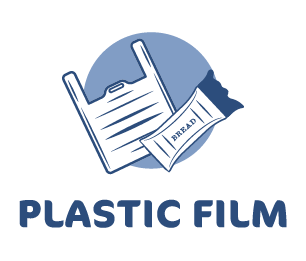
Accepted Materials
EVERY MONTH
Clean and dry stretchy plastic film of any color. Recycling types 2 (HDPE) and 4 (LDPE), if labeled:
- Grocery bags
- Amazon and other plastic film mailers
- Bubble wrap
- Product and case wrap
- Ziploc and sandwich bags – must be free of food residue
- Air pillows – must be flattened
- Bread bags
- Dry cleaning bags
- Produce bags
Tip: Try stretching it gently or mash it in your hand. If it stretches like a grocery bag, use this bag. If it sounds loud and crinkly when mashed, don’t.
Materials NOT Accepted
- If the material rips or tears instead of stretches
- Mixed-material items (e.g., paper mailers with bubble wrap inside)
- Foil-lined bubble wrap
- Biodegradable bags
- Foil-lined bags like snacks, candy bars, or granola bars wrappers and bags
Where does it go?
Orange Recycling Services compresses the plastic film into densified bales. These bales are then delivered to The TREX Company where they’re turned into composite deck boards or sent to other end users to be used for other materials.
Why recycle it?
Plastic bags are manufactured from petroleum and end up as waste in landfills and the ocean. These bags should never be put in with mixed recycling as they can cause equipment malfunctions at the recycling center.
Can I recycle this on my own?
Yes! Local grocery stores have drop off bins for clean, dry, plastic film.
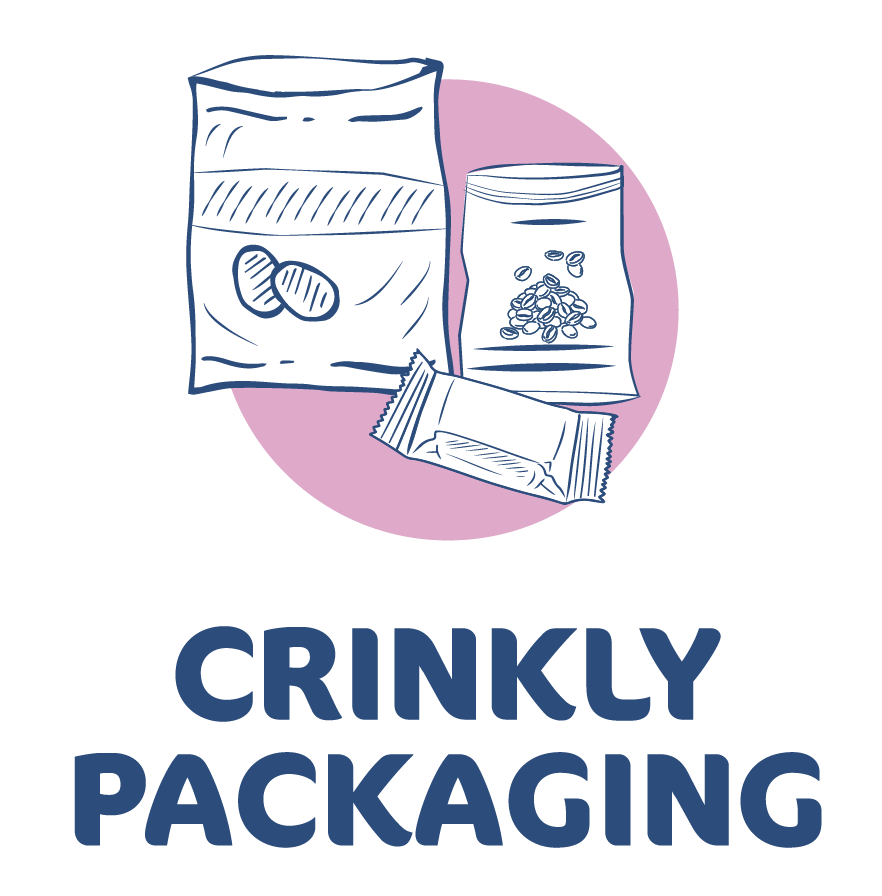
Accepted Materials
EVERY MONTH
Clean and dry crinkly plastic packaging of any color. These materials are usually thicker, loud when mashed, and do not stretch like grocery bags or bread bags.
- Chip bags
- Candy wrappers
- Granola bar and energy bar wrappers
- Coffee bags
- Frozen food bags
- Salad bags
- Pasta bags
- Cheese packaging
- Crinkly resealable food bags
- Food and drink pouches
- Woven plastic bags
- Produce netting
- Clean takeout utensils
- Plastic drinking straws
Tip: Try mashing it in your hand. If it sounds loud and crinkly and does not stretch, use this bag. If it stretches like a grocery bag, bread bag, or Ziploc-style storage bag, use the Plastic Film bag instead.
Materials NOT Accepted
- Stretchy plastic film, such as grocery bags, bread bags, produce bags, or plastic film mailers
- Items with paper liners
- Items that contain cardboard
- Items with mixed materials other than plastic, such as metal or paper
- Compostable or biodegradable packaging
- Dirty or wet items
Where does it go?
Crinkly Packaging is sorted and consolidated at The ReCollective warehouse. We remove anything that does not belong, compact the material, and send it to ByFusion, where it is transformed into durable construction blocks.
Why recycle it?
Crinkly Packaging is one of the hardest everyday materials to recycle because it is often made from multiple layers of plastic fused together. Most curbside programs do not accept it, so it usually ends up in the landfill. Collecting it separately allows us to send it to a specialized partner that can responsibly process it.
Can I recycle this on my own?
In most cases, no. Crinkly Packaging is generally not accepted in curbside recycling or store drop-off plastic film bins. The ReCollective collects it separately so it can be sorted, consolidated, and sent to a partner equipped to handle this material.
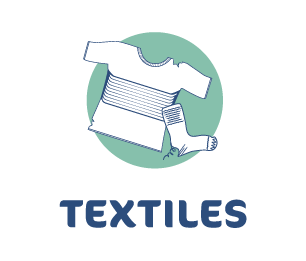
Accepted Materials
EVERY MONTH
Clean and dry textiles in any condition, including:
- Clothes
- Shoes
- Towels
- Sheets
- Purses
Materials NOT Accepted
Textiles that are:
- Wet
- Hazardous or contaminated
- Mildewed and moldy
- Pillows
Where does it go?
Clothing and textiles that are in good shape are donated to community organizations for reuse locally. For items that are not appropriate for reuse, we partner with Green Zone to recycle the textile fibers into new products.
Why recycle it?
Textile waste occupies nearly 5% of all landfill space and only 15% gets recycled.
Can I recycle this on my own?
Yes! Community organizations such as Good Will and the Durham Rescue Mission will accept clothing in good, reusable condition. Durham Solid Waste Management has a textile recycling drop off option as well.
Accepted Materials
EVERY MONTH
Only clean rigid block Styrofoam (EPS), recycling type 6
- Packaging blocks and sheets
- Coolers
Materials NOT Accepted
- Styrofoam takeout containers
- Styrofoam cups
- Styrofoam egg containers
- Packing peanuts
- Soft/flexible foam
Where does it go?
Our partner Orange Recycling Services densifies the Styrofoam. Densified blocks are then shipped to end market manufacturers to make things like plastic components, picture frames and building materials.
Why recycle it?
Styrofoam (EPS) is manufactured from petroleum, and like other plastic products, it is not easily biodegradable. EPS is also comprised of more than 90% air and fills up landfills and contaminates ecosystems.
Can I recycle this on my own?
DART Corporation in Randleman, NC will accept consumer styrofoam.
Accepted Materials
Household batteries
January, February, April, May, July, August, October, November
- Alkaline
- Nickel Cadmium (NiCd)
- Nickel Metal Hydride (NiMH)
- Lithium-Ion
- Button Cells
- Rechargeable
- Small electronics batteries
IMPORTANT: please put tape on the terminals of any 9v or greater voltage battery as well as lithium and larger size batteries.
Household Light Bulbs
March, June, September, December
- Incandescent
- CFL
- LED
- Halogen
*Note, 2 or 4 foot fluorescent tubes incur extra fee*
Materials NOT Accepted
- Car batteries
- Lead-acid batteries
- Swollen or bulging batteries
- Broken bulbs
Where does it go?
We partner with Batteries Plus. Batteries & bulbs are sent to facilities where metals and chemicals are recycled, and harmful materials are properly disposed of.
Why recycle it?
Recycling batteries helps keep toxic metals out of landfills and helps prevent ground water contamination.
Mercury containing light bulbs like CFLs can seep into groundwater. Phosphor, which is present in fluorescent bulbs and tubes, is toxic. Light bulbs contain valuable metals, glass and other materials that can be separated and recycled into new products.
Can I recycle this on my own?
Lowes and Batteries Plus have consumer drop off options.
Recycle Something Different Every Month
ReCo Pick features different hard-to-recycle and reusable materials throughout the year. Members receive the featured material and preparation instructions before each monthly pickup.
Examples of ReCo Picks
The schedule changes throughout the year based on reuse and recycling partner availability.
Where does it go?
We work with local reuse organizations and specialized recycling partners selected for each featured material.
ReCo One Stop and Add-on Services
Learn about ReCollective OneStop.
Add Food Scrap pickup to your Hard-To-Recycle plan (available in parts of the Triangle).
Accepted Materials
Food Scraps & Organics
- Fruit & vegetable scraps
- Eggshells
- Coffee grounds
- Loose-leaf tea
- Baked goods & bread
- Nuts & shells
- Seeds & pits
- Tofu
- Meats
- Dairy Items
- Coffee filters & tea bags
- Paper towels, napkins, and bags
- Flowers & house plant trimmings
- Pizza boxes
- Cotton fabric
- Anything that grows 🙂
Add-on Collection Services
Add these specialty materials to an upcoming pickup when needed. Fees help cover additional handling, transportation, and recycling costs.
Fluorescent Tubes
$4 per tube, up to 4 feet- Intact fluorescent tubes measuring 4 feet or less
- Place carefully beside your black ReCo bag
- Not accepted: broken tubes
Where does it go?
Batteries Plus works with recycling facilities that recover glass, metal, and other reusable components from fluorescent bulbs.
Why recycle it?
Fluorescent lighting requires specialized handling because it contains materials that should not enter the regular trash stream. Recycling also recovers useful glass and metals.
Printers & Monitors
$15 per item- Household printers
- Flat-screen monitors measuring 24 inches or less
- Not accepted: CRT tube monitors, larger monitors, or office-size printers and copiers
Where does it go?
Triangle Ecycling processes the printers and monitors collected through this service.
Why recycle it?
Responsible electronics recycling keeps potentially harmful components out of landfills and recovers metals, plastics, and other materials for reuse.
Clamshells (Recycling Symbol #1)
$5 per provided blue bag- Clear containers marked with recycling symbol #1
- Produce, berry, salad, herb, deli, and similar clamshells
- Rigid #1 PET lids
- Check your municipal recycling rules first because some local programs accept these curbside
Where does it go?
Most clamshells are recycled through Orange Recycling Services. Reuse opportunities with local growers may also be used when available.
Why recycle it?
Recycling PET keeps useful plastic out of the landfill and allows the material to be processed into new products.
#5 Plastics
$5 per provided green bag- Rigid containers marked with recycling symbol #5
- Yogurt and butter tubs, takeout containers, disposable cups, and matching lids
- Empty #5 prescription and over-the-counter pill bottles
- Check your municipal recycling rules first because some local programs accept these curbside
Where does it go?
The ReCollective works with Orange Recycling Services to process collected #5 polypropylene plastics.
Why recycle it?
Recycling polypropylene conserves material resources and reduces the amount of rigid plastic sent to landfills.
How it Works
Materials
About
F.A.Q.
Blog
Almost Anything Bag Program
Mailback Program
Terms of Service
Privacy Policy
Cookie Policy
Sign Up
Member Login
Email Support: Help@TheReCollective.co
Text Support: (919) 336-1765
Durham, NC 27701